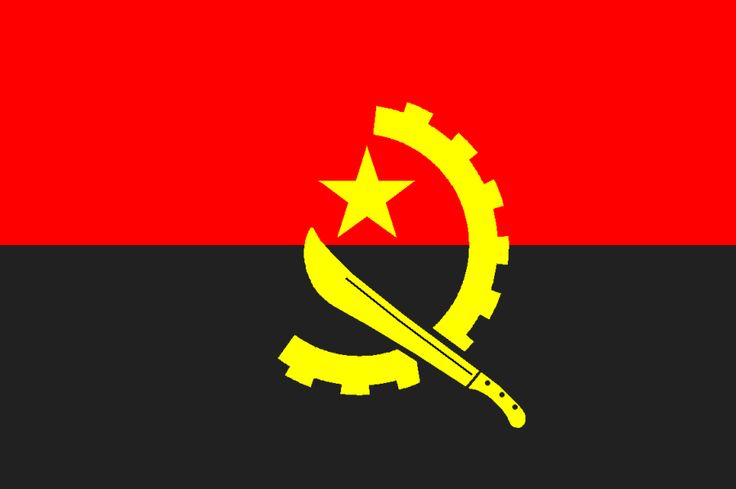
There is a profound historical weight attached to the 11th of November in southern Africa. On this date, Angola celebrates its Independence Day, commemorating the 1975 proclamation of national sovereignty and honoring the immense sacrifices of those who fought and died in the liberation struggle against Portuguese rule. But the true story of Angola's independence, or indépendance angola as it echoed through the international solidarity movements of the time, is one of unimaginable hardship, fierce resistance, and a complex geopolitical proxy war that shaped the modern African continent.
To understand the independence of Angola, we must delve into the brutal reality of Portuguese colonial exploitation, the rise of powerful nationalist movements, and the international forces that turned a war for freedom into a Cold War battleground.
The Portuguese Exploitation
The Portuguese occupied Angola for five centuries, beginning with the arrival of navigator Diogo Cão in 1482. The colonial system they established was profoundly exploitative, designed to drain the territory of its vast resources, including oil, iron, copper, bauxite, diamonds, and uranium, to support Portugal's economy.
The indigenous people of Angola were forced to submit to a feudal regime characterized by “the blackest misery”. The Portuguese government systematically sent poverty-stricken, illiterate peasants from the metropole to colonize the land, stripping native Angolans of their ancestral homes. Furthermore, Portuguese workers were given a monopoly over all forms of skilled and semi-skilled labor, from taxi drivers to construction foremen, leaving only unskilled manual labor for the Africans.
Those who could not find work were subjected to the brutal contratados system, a form of forced labor where African families were recruited against their will, separated, and assigned to harsh work on roads, bridges, and plantations. In the eyes of the colonizers, the Angolan people were mere tools for the extraction of wealth.
Perhaps the most insidious tool of oppression was the indigenato system. Portuguese legislation created a strict division between civilized and uncivilized populations. Out of an Angolan population of 4,500,000, 98 percent were Black Africans classified under the lowly indigenato status. This status officially denied them basic political, social, and economic rights, subjecting them to corporal punishment while only about 30,000 Africans enjoyed the status of civilized citizens. Educational obscurantism was widespread; illiteracy was deliberately maintained at around 90 percent to ensure the population remained disenfranchised.
The Awakening of Angolan Nationalism
This mounting exploitation inevitably ignited the spark of revolution. The Angolan war of independence officially erupted in early 1961, fueled by labor strikes and uprisings. On January 3, 1961, agricultural workers in the Baixa de Cassanje region struck against the Cotonang company over horrific working conditions. The Portuguese responded with devastating air raids, killing hundreds of indigenous villagers.
The anti-colonial resistance quickly galvanized around three primary nationalist factions, each led by prominent figures who shaped the struggle for Angolan independence:
- MPLA (Popular Movement for the Liberation of Angola): Founded in the late 1950s, the MPLA was a progressive, Marxist-leaning organization led by figures like Agostinho Neto. It drew strong support from the Ambundu people and urban intellectuals in Luanda. The MPLA also championed women's rights; Deolinda Rodrigues, a fierce Angolan revolutionary, founded the Organization of Angolan Women (OMA) to organize women within the movement and even fought alongside the guerrilla unit Esquadrão Kamy.
- FNLA (National Liberation Front of Angola): Organized in the early 1960s and led by Holden Roberto, the FNLA drew heavily from regional bases in the north and established a government-in-exile in Zaire.
- UNITA (National Union for the Total Independence of Angola): Founded in 1966 by Jonas Savimbi after he broke away from the FNLA, UNITA built its base among the Ovimbundu people in the central and southern regions of Angola.
For over a decade, these factions waged a grueling guerrilla campaign against Portuguese forces, utilizing the vast Angolan countryside to ambush colonial troops and sabotage infrastructure.
The Carnation Revolution and the Alvor Agreement
The turning point for the Angola war of independence did not occur in the African bush, but on the streets of Lisbon. By the early 1970s, the colonial wars in Angola, Mozambique, and Portuguese Guinea were consuming 40 percent of Portugal's national budget. On April 25, 1974, a group of war-weary, left-wing Portuguese military officers known as the Armed Forces Movement (MFA) staged a coup, overthrowing the authoritarian Estado Novo regime in what became known as the Carnation Revolution.
The new Portuguese government immediately halted military actions in Africa and moved to grant the colonies independence. On January 15, 1975, the Portuguese government, the MPLA, the FNLA, and UNITA signed the Alvor Agreement, which established a transitional government and scheduled official independence for November.
However, the transitional government quickly collapsed. The nationalist factions, deeply distrustful of one another and unwilling to share power, resorted to armed conflict to seize total control of the territory.
The Cold War Proxy Battle
The internal power struggle instantly attracted global superpowers. Angola's vast wealth made it a highly coveted prize for imperialist forces, turning the impending independence Angola was about to face into the epicenter of the Cold War.
- The FNLA and UNITA forged a desperate alliance to stop the MPLA from taking over the country.
- They were heavily supported by troops from Zaire and an invading armored column from apartheid South Africa.
- Additionally, the FNLA and UNITA received millions of dollars in military aid from the United States government and the CIA, alongside reports of British and American mercenaries fighting on their behalf.
- In response, the MPLA requested international assistance. They received crucial shipments of Soviet weaponry, and the Republic of Cuba sent thousands of troops to Angola in a massive airlift to aid the MPLA forces against the South African and Zairean invasions.
Bolstered by Cuban soldiers and Soviet rockets, the MPLA successfully stemmed the tide of the invasion, pushing the FNLA out of the north and checking the UNITA-South African advance in the south.
The Dawn of Independence and the Tragic Aftermath
On November 10, 1975, the Portuguese officially withdrew from Luanda. The following day, November 11, MPLA President Agostinho Neto proudly declared the independence of the People's Republic of Angola. The new government was swiftly recognized as the legitimate authority by the Organization of African Unity and more than 80 nations worldwide. In defiance, the FNLA and UNITA proclaimed their own rival government based in Huambo, though it failed to gain international recognition.
While the declaration of independence marked a historic triumph over 500 years of colonial subjugation, the aftermath was utterly devastating. The unresolved political rivalries and persistent foreign intervention plunged the newly liberated nation directly into the Angolan Civil War. This catastrophic conflict would rage for nearly three decades, finally ending in 2002 after claiming over a million lives and displacing millions more.
Today, the 11th of November remains a day of profound significance. It is a moment to remember the unbreakable spirit of the Angolan people, who endured the horrors of colonial enslavement and the tragedies of a proxy war to finally seize the reins of their own destiny.