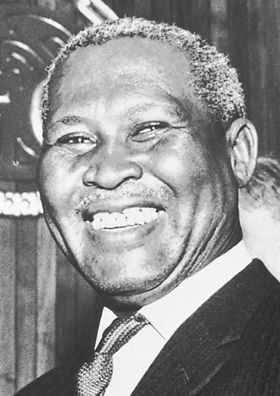
In the long and arduous march toward liberation in South Africa, few leaders embody the marriage of moral conviction, traditional leadership, and unyielding political courage quite like chief Albert Luthuli. Long before the world recognized the anti-apartheid struggle through the global icons of the late 20th century, it was Inkosi Albert Luthuli who held the torch of freedom.
A man of deep Christian faith, traditional Zulu heritage, and immense personal dignity, Luthuli transformed the African National Congress (ANC) into a mass movement committed to non-violent resistance against systemic racial oppression. His life's work demonstrated that true strength lies not in the weapons one wields, but in the unwavering righteousness of one's cause.
Early Life and Education
Understanding any Albert Luthuli biography requires examining his roots in faith, education, and service. Born around 1898 in Bulawayo, Rhodesia (now Zimbabwe), Albert John Mvumbi Luthuli was the son of John Bunyan Luthuli, a Seventh-day Adventist missionary, and Mtonya Gumede. After his father passed away during his infancy, young Albert returned with his mother to their ancestral home in Groutville, Natal, South Africa, around 1908.
Raised under the care of his uncle, Chief Martin Luthuli, the young boy was immersed in both traditional Zulu governance and Christian values. His mother worked tirelessly in the fields and washed laundry to fund his schooling. Luthuli excelled academically, studying at the Ohlange Institute, founded by ANC co-founder Dr. John Dube, and later at Edendale.
After qualifying as a teacher in 1917, Luthuli earned a prestigious bursary to attend Adams College, where he completed his Higher Teacher's Diploma. Recognizing his exceptional intellect and character, Adams College invited him to join its faculty in 1922, making him one of the first African instructors at the institution. For fifteen years, Luthuli dedicated himself to education, advocating passionately that schooling for Black Africans should be liberal, equal, and empowering rather than merely vocational. In 1928, he became secretary of the Natal Native Teachers' Association, ascending to its presidency in 1933.
Inkosi Albert Luthuli: Embracing the Chieftainship
In late 1935, a pivotal turning point altered the course of Luthuli's life. The tribal elders of the Umvoti Mission Reserve in Groutville democratically elected him as their chief. Accepting the call meant making a significant financial sacrifice, as a chief’s government stipend was a fraction of his professional teaching salary. Yet, driven by a profound call to service, he assumed his duties in January 1936.
As Inkosi Albert Luthuli, he governed the 5,000 people of his community with humility, fairness, and an inclusive spirit rooted in Ubuntu. He served as magistrate, mediator, and traditional leader, involving women in community decision-making and forming the Groutville Bantu Cane Growers' Association to protect the economic livelihoods of Black sugarcane farmers.
However, serving as a chief exposed Luthuli directly to the devastating impact of segregationist legislation, such as the 1936 Hertzog Bills, which stripped Africans of land rights and political representation. He realized that the poverty and disenfranchisement of his villagers were part of a national system of oppression that demanded a broader, unified response.
In 1944, chief Albert Luthuli formally joined the African National Congress. His political stature grew rapidly. He was elected to the Natal ANC Executive Committee in 1945, joined the Natives Representative Council in 1946, and was elected President of the Natal ANC in 1951.
When the ANC launched the Defiance Campaign in 1952, a massive, disciplined campaign of non-violent civil disobedience against pass laws and apartheid regulations, Luthuli threw his full weight behind the movement. The apartheid government issued him an ultimatum: resign from the ANC or forfeit his position as a government-sanctioned traditional chief.
Luthuli refused to abandon either duty voluntarily. In November 1952, the government stripped him of his chieftainship. Luthuli responded by issuing his famous public manifesto, The Road to Freedom is via the Cross:
“In so far as gaining citizenship rights and opportunities for the unfettered development of the African people, who will deny that thirty years of my life have been spent knocking in vain, patiently, moderately and modestly at a closed and barred door? ... The Road to Freedom is via the CROSS.”
Recognizing his moral authority, the ANC elected him as its President-General in December 1952.
Leading the ANC Through the Fires of Apartheid
As President-General, Luthuli guided the liberation movement through its most perilous decade. The apartheid regime retaliated against his leadership by serving him with four successive banning orders between 1953 and 1964, restricting his movements, banning him from public gatherings, and confining him to the Lower Tugela district around Groutville.
Despite these severe restrictions, Luthuli’s influence remained paramount:
- The Freedom Charter (1955): Although confined to Groutville due to a banning order and recovering from illness, Luthuli helped guide the alliance that convened the historic Congress of the People in Kliptown. The resulting Freedom Charter declared that “South Africa belongs to all who live in it, black and white.” For his leadership, the ANC awarded him the Isitwalandwe, its highest honor.
- The Treason Trial (1956–1961): In December 1956, Luthuli was among 156 anti-apartheid leaders arrested and charged with high treason. After an arduous preliminary examination lasting a year, the state dropped charges against Luthuli and 64 others in December 1957 due to lack of evidence.
- Defiance of Pass Laws (1960): Following the horrific Sharpeville Massacre on March 21, 1960, where police shot 69 peaceful protesters, Chief Luthuli publicly burned his passbook in a powerful act of defiance, calling for a national day of mourning. He was subsequently arrested, fined, and handed a suspended prison sentence.
The 1960 Nobel Peace Prize
In October 1961, the world officially acknowledged the moral magnitude of Luthuli's struggle. He was awarded the 1960 Albert Luthuli Nobel peace prize for his role in leading the non-violent campaign against apartheid and advocating for peaceful reconciliation in South Africa.
He was the first African recipient and the first individual outside Europe and the Americas to win the prestigious prize. After intense international pressure, the South African government reluctantly granted him a temporary passport to travel to Oslo, Norway, accompanied by his wife, Nokukhanya.
On December 10, 1961, wearing traditional ceremonial attire, chief Albert Luthuli received the Nobel Peace Prize to a standing ovation. In his memorable Nobel lecture, titled Africa and Freedom, he dedicated the honor to all people struggling for liberty:
“The Nobel peace award that has brought me here has for me a threefold significance... it is a tribute to my humble contribution to efforts by democrats on both sides of the color lines to find a peaceful solution to the race problem... [and] a democratic declaration of solidarity with those who fight to widen the area of liberty in my part of the world.”
The Albert Luthuli Nobel peace prize elevated the anti-apartheid movement to the global stage, drawing international condemnation toward the South African government and inspiring freedom movements across the globe.
The Shift in Strategy and Final Years
Upon his return from Oslo, the political terrain in South Africa shifted drastically. With the ANC officially banned and non-violent protests met with increasing police brutality, younger leaders within the movement, including Nelson Mandela, argued that the ANC needed to establish an armed wing for self-defense and sabotage.
While chief Albert Luthuli remained personally committed to non-violence throughout his life, he acknowledged the reality facing his people. He sanctioned the creation of uMkhonto we Sizwe (MK) as an autonomous military structure linked to the ANC, ensuring that its targets were restricted to state installations to minimize loss of human life.
In May 1964, the government served Luthuli with his strictest banning order yet, confining him strictly to his farm in Groutville and forbidding him from receiving visitors or publishing statements. Despite this isolation, high-profile figures still sought him out, including U.S. Senator Robert F. Kennedy, who visited Luthuli in Groutville in June 1966, later describing him as one of the most impressive champions of human dignity in the world.
Tragic Passing and Unbroken Legacy
On July 21, 1967, chief Albert Luthuli died at the age of 69 after reportedly being struck by a freight train while crossing a narrow bridge near his home in Groutville. The official apartheid-era inquest concluded his death was an accident due to failing eyesight and hearing. However, after decades of suspicion from his family and the ANC, a South African court officially reopened the matter and ruled in October 2025 that Luthuli had in fact been beaten to death by apartheid police before being placed on the tracks.
Today, the legacy of Inkosi Albert Luthuli endures as a cornerstone of modern, democratic South Africa. His former home in Groutville is now the Luthuli Museum, the ANC headquarters in Johannesburg is named Luthuli House, and the South African government confers the Order of Luthuli as its highest honor for contributions to democracy and human rights.
Chief Albert Luthuli proved that leadership is not defined by raw power or military force, but by an unyielding commitment to justice, human dignity, and the universal brotherhood of all mankind.
Key Milestones in the Life of Chief Albert Luthuli
- 1898: Born in Bulawayo, Rhodesia.
- 1922–1935: Taught at Adams College; elected President of Natal Native Teachers' Association (1933).
- 1936: Installed as Chief (Inkosi) of Groutville.
- 1952: Led the Defiance Campaign; deposed as Chief by government; elected ANC President-General.
- 1956–1957: Arrested and tried in the Treason Trial (acquitted).
- 1960: Publicly burned passbook following Sharpeville Massacre.
- 1961: Awarded the 1960 Nobel Peace Prize in Oslo, Norway.
- 1967: Died on July 21 near Groutville.