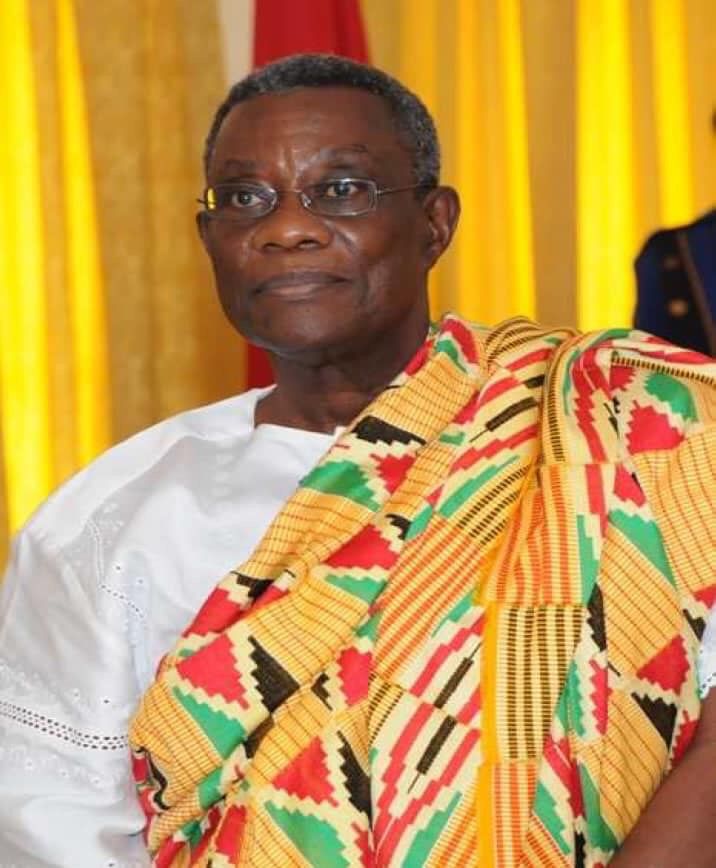
In an era where political power is often wielded like a heavy hammer, some rare souls choose the soft, unyielding power of peace. John Evans Atta Mills was one such soul. Widely known across West Africa as Asomdweehene, a sacred Fante title meaning the “King of Peace,” his life offers a masterclass in servant leadership, quiet dignity, and unshakeable moral fortitude.
When we look into the biography of Atta Mills, we see a story that shatters the conventional template of African statecraft. He was not a military general who seized power by force, nor was he a loud populist who fed on societal divisions. He was a scholar, a sportsman, a taxation expert, and a devoted Christian who walked into the brutal arena of national politics and somehow managed to keep his heart completely untainted.
To trace the life of John Evans Atta Mills is to witness a profound journey of patience. He faced crushing public defeats, endured malicious health rumors, and bore the heavy burdens of state, yet he never lost his trademark warmth, his gentle humor, or his deep compassion for the ordinary citizen.
The Early Life and Scholarly Rise of Professor Atta Mills
The story of John Atta Mills begins on July 21, 1944, in the mining town of Tarkwa, located in the Western Region of Ghana. Born to John Atta Mills Sr., a dedicated educator, and Mercy Dawson Amoah, young Fiifi was raised in a home that revered knowledge, discipline, and faith. Though born in Tarkwa, his roots traced directly back to the coastal town of Ekumfi Otuam in the Central Region, anchoring him deeply within the rich traditions of the Fante people.
From an early age, his academic brilliance was unmistakable. He attended the prestigious Achimota School for his secondary education, where he excelled academically and earned his Advanced-Level Certificate in 1963. He then proceeded to the University of Ghana, Legon, completing his Bachelor of Laws degree and professional law certificate in 1967.
Hungry for higher learning, the young scholar traveled across the Atlantic to the United Kingdom. He earned his Master of Laws at the London School of Economics and Political Science in 1968, before pursuing a doctorate at the School of Oriental and African Studies, part of the federal University of London. In 1971, at the remarkably young age of twenty-seven, he defended his doctoral thesis on taxation and economic development, simultaneously being selected as a Fulbright Scholar at Stanford Law School in the United States.
Returning to his homeland, Professor Atta Mills dedicated nearly twenty-five years of his life to teaching law at the University of Ghana, Legon, eventually rising to the rank of Associate Professor. He also shared his expertise globally, serving as a visiting professor at Temple University in Philadelphia and Leiden University in the Netherlands. Beyond academia, his specialized knowledge of fiscal systems led to his appointment as Acting Commissioner, and later substantive Commissioner, of Ghana's Internal Revenue Service under President Jerry John Rawlings.
From the Classroom to the Corridors of Power
The transition from academic life to national governance happened swiftly in late 1996. Following a political realignment within the ruling coalition, President Jerry Rawlings chose Professor Atta Mills as his vice-presidential running mate for the 1996 general election. The ticket won, and Evans Atta Mills served as Vice President of Ghana from 1997 to 2001, acting as Chairman of the Economic Management Team and leading major police service reforms.
When Jerry Rawlings completed his constitutionally mandated two terms in 2000, the National Democratic Congress selected John Atta Mills as its presidential flagbearer. What followed was a grueling, twelve-year test of his political endurance. He ran for president in the 2000 election but lost in the second round to John Agyekum Kufuor of the New Patriotic Party. Undeterred, he ran again in 2004, suffering a second defeat against the incumbent Kufuor.
Where lesser men would have retreated into bitter retirement, John Evans Atta Mills displayed astonishing resilience. He regrouped his party and returned for a third attempt in the historic 2008 general election. Campaigning under the memorable slogan “A Better Man for a Better Ghana” and launching his signature Better Ghana Agenda policy, he promised a humble, inclusive, and less polarizing government.
The 2008 election became the closest, most nerve-wracking presidential race in Ghanaian history. After a tight first round and a tense second-round run-off against Nana Akufo-Addo, the entire nation held its breath as a single constituency, Tain, was forced to vote again due to ballot distribution issues. On January 3, 2009, John Atta Mills was officially declared the victor by a razor-thin margin of less than one percent. On January 7, 2009, he was peacefully sworn in as the President of the Republic of Ghana, proving that quiet persistence can overcome the fiercest political odds.
Transformation Under the Better Ghana Agenda
As President Atta Mills assumed office, he inherited an economy facing international economic headwinds and rising domestic inflation. Applying his decades of fiscal expertise, he immediately instituted prudent austerity and monetary measures. Under his watchful eye, Ghana achieved single-digit inflation of 8.4%, marking one of the lowest inflation rates the country had experienced in over forty years.
In 2011, driven by the historic launch of commercial oil production from the offshore Jubilee oil fields and comprehensive economic policies, Ghana was recognized by the International Monetary Fund as the fastest-growing economy in the world, recording an extraordinary annual growth rate of over fourteen percent. Through a strategic 2010 GDP rebasing exercise, his administration updated national economic statistics, formally elevating Ghana to a middle-income country status.
President Mills believed deeply that economic growth was meaningless if it did not transform the lives of ordinary, vulnerable citizens. Under his education reforms, his government expanded the capitation grant, distributed over 23 million free exercise books, provided free school uniforms to deprived communities, and systematically eliminated almost 1,700 “schools under trees,” replacing them with modern, dignified classroom structures. He also established two specialized public universities: the University of Health and Allied Sciences in the Volta Region and the University of Energy and Natural Resources in the Brong-Ahafo Region.
In health, his government expanded the National Health Insurance Scheme, increasing patronage by seventy-five percent, while upgrading regional and teaching facilities like the Tamale Teaching Hospital. True to his word to run a lean, cost-effective government, he reduced the number of cabinet ministers, eliminated unnecessary presidential staffers, and established the Ghana Heritage Fund to save oil revenues for future generations.
Internationally, his diplomatic, non-confrontational style earned him universal respect. During an official visit to Accra, US President Barack Obama famously praised President Atta Mills, holding Ghana up as a shining “good news story” of African democracy and institutional integrity.
The Tragic Sunset at Asomdwee Park
Despite his monumental achievements, President Atta Mills fought a quiet, painful personal battle against failing health. Throughout his presidency, political opponents and media rumors frequently fixated on his physical condition. He bore these public intrusions with characteristic grace, occasionally joking about the premature reports of his passing.
On July 24, 2012, three days after celebrating his sixty-eighth birthday, the heartbreaking news swept across the nation. President John Evans Atta Mills had passed away at the 37 Military Hospital in Accra after suddenly falling ill. He became the first sitting head of state in Ghanaian history to die in office. His brother later confirmed that he had succumbed to complications from a massive hemorrhagic stroke resulting from a brain aneurysm.
The entire nation plunged into an unprecedented wave of collective grief. For three days, his body lay in state at the State House in Accra as hundreds of thousands of weeping citizens queued in lines miles long to pay their last respects. His state funeral attracted over sixty-seven foreign delegations, including eighteen African heads of state, international diplomats, and global leaders.
He was laid to rest with full military honors at Asomdwee Park, a serene sanctuary near Fort Christiansborg overlooking the Gulf of Guinea. As a hundred white doves were released into the sky, the world said goodbye to a man who had governed without malice, spoken without insult, and served without arrogance.
An Unbroken Legacy of Integrity
Fourteen years after his passing, the memory of John Evans Atta Mills shines brighter than ever. His successor, John Dramani Mahama, who had served loyally as his Vice President, described him as a gentle soul whose character was his greatest strength.
Today, his name is immortalized across the Ghanaian landscape. The second floating production storage and offloading vessel in Ghana's oil fields was named FPSO John Atta Mills. Major streets in Accra and Cape Coast bear his name, the Faculty of Law building at the University of Ghana was co-named in his honor, and the Judicial Council named its central court complex after him.
Yet, his greatest monument is not carved in stone or written on street signs. It lives in the political philosophy he left behind. In a world where politics is so often corrupted by noise, anger, and revenge, the John Evans Atta Mills biography stands as a timeless reminder that true power belongs to the humble. He proved that a leader can be deeply intellectual yet completely accessible, firm in conviction yet gentle in speech, and that a presidency built on peace, integrity, and love for the people will endure forever.