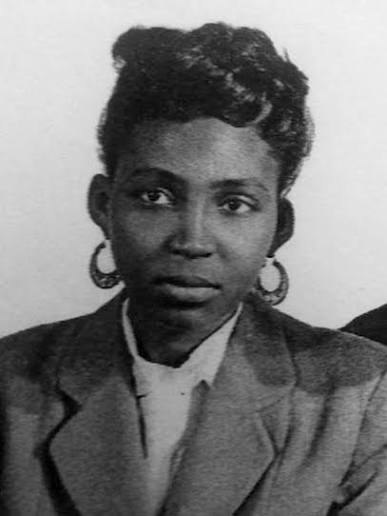
In the grand tapestry of African history, the narratives of liberation are too often dominated by men who stood on podiums or waged wars. Yet, arguably, the most profound revolutions happen within the walls of a home, inside the quiet corridors of a woman’s heart, and on the pages of a notebook. The late, great Mariama Bâ knew this intimately. A daughter of Senegal, a Muslim, a mother, and an intellectual titan, she picked up her pen to wage a war that no politician could fight: the war for the soul and dignity of the African woman.
To understand the sheer magnitude of Mariama Ba, one must first understand the era she navigated. Born in Dakar on April 17, 1929, she lived through the suffocating era of French colonialism and the euphoric, yet turbulent, dawn of Senegalese independence. While the newly independent nation of Senegal was fiercely debating its cultural identity, torn between French assimilation, Islamic tradition, and indigenous African values, Mariama was waging a deeply personal battle to define what it meant to be a free African woman.
A Mind That Refused to Be Caged
The journey of Mariama is one of brilliant, quiet defiance. Born into an affluent, educated Lebu family, she suffered the tragic loss of her mother at just four years old. She was raised primarily by her maternal grandparents in a traditional Islamic household. Her grandparents, reflecting the patriarchal norms of the time, firmly believed that formal education was unnecessary for a Senegalese girl, expecting her to focus solely on domestic duties.
However, her father, Amadou Bâ, a prominent figure who would later become Senegal’s first Minister of Health, recognized his daughter’s towering intellect. He fiercely advocated for her education, enrolling her in a French-language school in Dakar while she simultaneously attended Koranic school.
At just fourteen years old, Mariama took an entrance examination for the prestigious École Normale de Rufisque, a French teacher-training school, and scored the highest out of all students in colonial French West Africa. Her time at Rufisque was transformative. Under the mentorship of progressive educators like Germaine Le Goff, who encouraged her students to take great pride in their African roots rather than blindly assimilate into French culture, Mariama found her political and intellectual awakening.
The Teacher, The Mother, The Activist
Graduating with her teaching certificate in 1947, Mariama Bâ embarked on a twelve-year career as an educator, later becoming a regional school inspector. During this time, she married Senegalese politician Obèye Diop, a union that produced nine children.
The marriage eventually ended in divorce, leaving Mariama to raise her nine children as a single mother in a society where women were expected to remain totally dependent on men. The emotional toll of this experience, coupled with her profound observations of the women around her, ignited an activist fire.
By the late 1970s, Mariama threw herself into the fight for women’s rights. She joined grassroots organizations and wrote powerful articles demanding equal access to education for girls, criticizing female genital mutilation, and condemning the systemic exploitation of women. She fiercely rejected the Western label of feminist, seeing it as laden with foreign values, yet she undeniably laid the groundwork for indigenous African feminism. She believed deeply that African women did not need to be saved by the West; they needed to be empowered to reclaim the dignity that their own traditions and religions, when interpreted justly, already afforded them.
“So Long a Letter”: A Masterpiece of African Womanhood
At the age of 51, Mariama Bâ released her crowning achievement: Une si longue lettre (translated as Mariama Ba so long a Letter). Published in 1979, the novel exploded onto the global literary scene.
The book is an epistolary novel, written as a deeply intimate, diary-like letter from a recently widowed woman, Ramatoulaye, to her lifelong friend Aïssatou, who lives in the United States. Through Ramatoulaye’s grieving process, Bâ surgically deconstructs the emotional devastation caused by the practice of polygamy in postcolonial Senegal.
In the novel, Ramatoulaye’s husband, after 25 years of marriage, abandons her for a girl the same age as his own daughter. While Ramatoulaye chooses to remain in the marriage, leaning on her Islamic faith for resilience, her friend Aïssatou chooses the more radical path of divorce when faced with the same betrayal, refusing to compromise her self-worth.
Through these two women, Mariama Ba illustrated the diverse ways African women negotiate their survival under patriarchal oppression. She did not attack Islam; rather, she attacked the hypocritical, male-dominated interpretation of religion and tradition designed to subjugate women.
So Long a Letter was an unprecedented triumph. It won the inaugural Noma Award for Publishing in Africa in 1980 and has since been translated into more than a dozen languages, becoming a staple in literature and women's studies courses worldwide.
Scarlet Song and a Legacy Cut Short
Tragically, Mariama Ba did not live long enough to witness the full global impact of her genius. She died of lung cancer on August 17, 1981, at the age of 52.
Her second novel, Un Chant écarlate (Scarlet Song), was published posthumously. It explored the complex, often tragic dynamics of an interracial marriage between a French woman and a Senegalese man, further dissecting the brutal tyranny of tradition and the deep cultural fractures left behind by colonialism.
The Enduring Brilliance of Mariama Bâ
Mariama Bâ was a visionary who understood that the true liberation of Africa could never be achieved while its women remained chained by oppressive traditions. She wrote to force postcolonial Africa to look in the mirror.
Today, her legacy breathes through the Maison d'Éducation Mariama Bâ, an elite boarding school for gifted girls on Gorée Island, named in her honor by President Léopold Sédar Senghor. But her true monument is her literature. She proved that African women have always been intellectual architects, that our stories are universally resonant, and that our voices, even when written in a quiet letter, have the power to shake the foundations of the world.